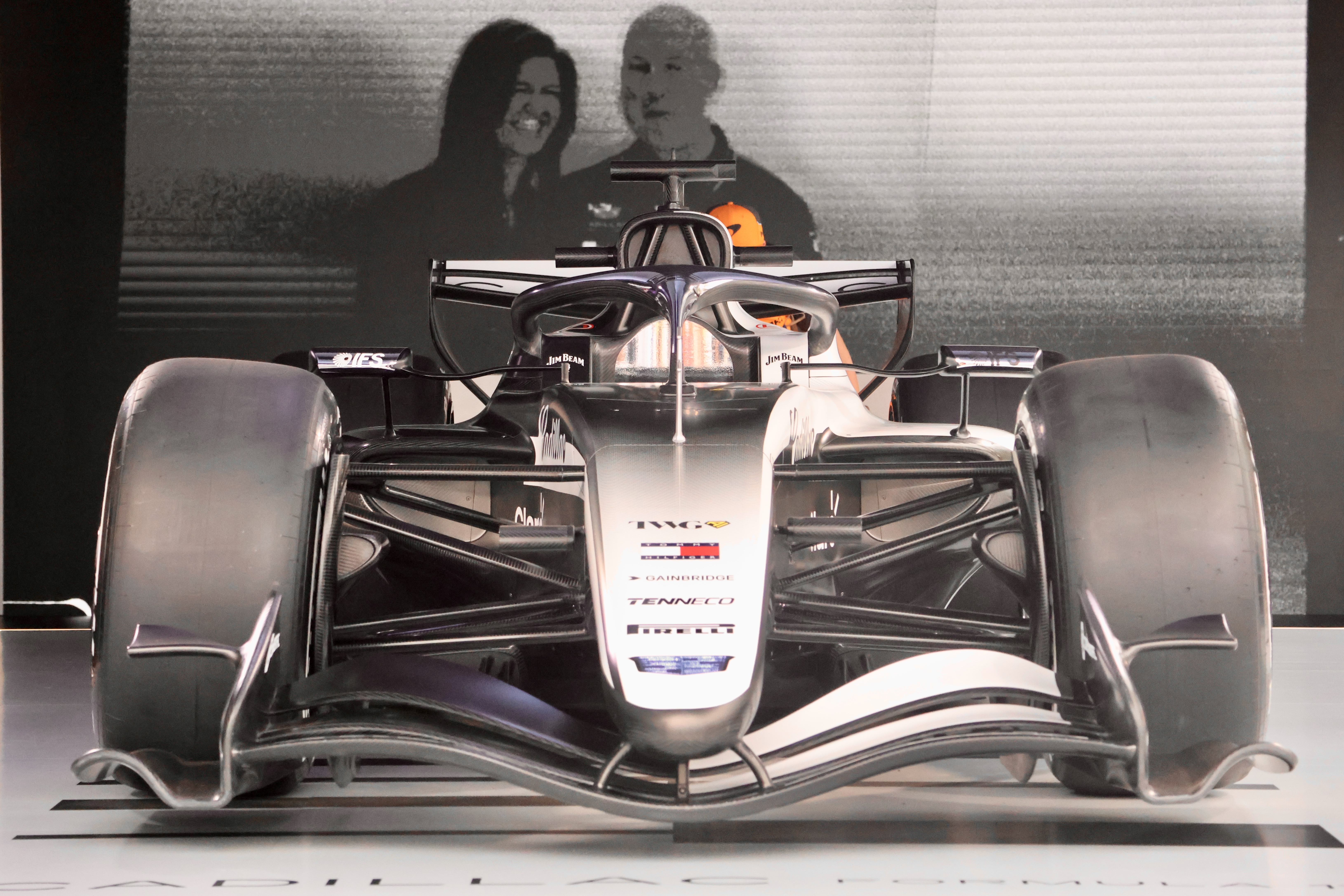
On 20 August, TWG Global put out a one-line statement: it was “not considering a sale of the Cadillac team or any other part of TWG Motorsport.” Nobody had accused it of planning one. The denial existed because its billionaire owner, Mark Walter, had spent the prior weeks shedding sports assets and rearranging others, and because the insurance companies funding much of his empire were, at the same moment, being forced by federal investigators to unwind billions of dollars in loans to his own businesses. A team that races cars is not usually where an insurance-company balance sheet problem shows up. This is that story.
What the insurers actually did
Delaware Life Insurance and Clear Spring Life and Annuity, both controlled by Walter, disclosed related-party lending arrangements that the companies themselves later conceded had not been properly flagged as affiliated. Reporting citing Delaware Life’s own restated filings put related-party investments at roughly $17 billion, or about 39% of invested assets, up from a previously reported $1.4 billion, or about 3%. On 18 August, TWG Global agreed to buy back up to $6.5 billion of those affiliated assets from Delaware Life and swap in an equal value of unaffiliated ones. Clear Spring separately trimmed its own related-party exposure by $90 million. Between the two insurers, the pool of loans that had “previously conceded carried undisclosed affiliated status” topped $20 billion.
Regulators allow insurers to lend to related parties. What they require is disclosure, precisely so that an owner cannot quietly use policyholder and annuity-holder money to fund his own ventures on favorable terms while the people whose premiums fund the balance sheet have no idea. The Justice Department’s Southern District of New York and the SEC are examining whether that disclosure happened here. A class action filed on 18 September in the Southern District of Florida goes further, alleging Walter diverted customer funds into “businesses he was directly connected to” without properly informing them. TWG Global, Delaware Life and Group 1001 Insurance are named; Group 1001 says it will defend the case “consistent with our long track record of serving policyholders with integrity.”
Why an F1 team is downstream of an insurance filing
TWG Global is the holding company behind TWG Motorsport, which owns Cadillac’s Formula 1 team. It is also the vehicle behind Walter’s stake in the Los Angeles Dodgers, his recently completed acquisition of the Los Angeles Lakers at a $12.5 billion valuation (a deal this newsletter covered when it closed, financed in part with leverage rather than straight cash), and, until this month, a stake in Chelsea FC that Walter and Todd Boehly agreed to sell to Clearlake Capital, reported by Bloomberg and CNBC in September (also covered here, from the other side of that transaction).
None of those deals are illegal or, on their own, unusual for a multi-sport ownership group. What connects them to the insurance probe is more basic: a conglomerate that can borrow cheaply against a captive balance sheet can outbid rivals for franchises without tying up as much of its own cash. If regulators decide that balance sheet was itself built on undisclosed self-dealing, the cost of capital for everything downstream of it, including a brand-new, expense-heavy F1 team, goes up. Two banks, Truist and Fifth Third, already paused sales of Delaware Life’s annuity products this quarter while the probe plays out, which is a distribution problem for the insurer regardless of how the legal questions resolve.
The team itself was already an expensive bet
Cadillac’s entry into Formula 1 this season came with a $450 million anti-dilution fee, split evenly into $45 million payments to each of the ten incumbent teams, compensation for permanently splitting the sport’s roughly $1.27 billion annual prize pool eleven ways instead of ten. Mercedes principal Toto Wolff called the figure “too low,” arguing the one-off payment would be overtaken by the incumbents’ cumulative lost income within a few seasons. The bet, from the rest of the grid’s side, was that an American manufacturer entry would grow the sport’s US audience and commercial value enough to make the dilution worthwhile. Precedent is mixed: Haas has raced under the American flag since 2016 without doing much to move F1’s US growth, which has instead tracked Liberty Media’s own marketing and Netflix’s “Drive to Survive.”
That bet was underwritten by Walter and TWG Global’s balance sheet capacity. A federal probe that forces the insurance arm of that balance sheet to shed $20 billion in loans and hand back cheap capital is not a direct threat to Cadillac’s grid spot. It is a threat to how comfortably its owner can keep funding a team that, by the rest of the paddock’s own accounting, is still running at a structural loss relative to what it paid to get there.
Why this matters
Sports ownership groups increasingly look like financial conglomerates with a franchise attached, and the financing usually runs in one direction: from adjacent businesses into the team, presented as evidence of a deep-pocketed, stable owner. The Walter situation is a reminder that the arrow can run backward. When the adjacent business is a regulated insurer, and the “deep pockets” turn out to be policyholder money moved around without proper disclosure, the team is not insulated from that just because it plays no part in the wrongdoing. It simply finds out later, in the form of a costlier owner, exactly how much of its funding was ever really there.
The Wage Bill